FRONTIER No. 07 — The SI Era
Cover Story · SpaceX Texas · 15 Oct 2026

The car finally left the ground.

Nine years after the promise was first made, the all-electric supercar took the stage at a Texas aerospace test site and completed what no production car has ever attempted — it lifted off. On board is a cold-gas thruster system co-developed with the aerospace team, holding the car in a short hover above the pad; underbody fans press downward, letting it withstand up to 2G of lateral acceleration through a corner. The base version, without the rocket thruster package, is planned to enter production in 2028.

Scroll to read
01 The Timeline ◆Two years · five years · ten years

What arrives, and when.

The flying car is the headline, not the whole story. Every technology lands on its own clock, and it helps to name three of them. Inside two years the change is mostly software — work that acts on your behalf. Inside five it grows a body, and machines begin to move through the world the way you do. Inside ten it stops being a tool at all and becomes superintelligence — SI — a mind we can name, question and hold to our own values. Pick a horizon and step in.

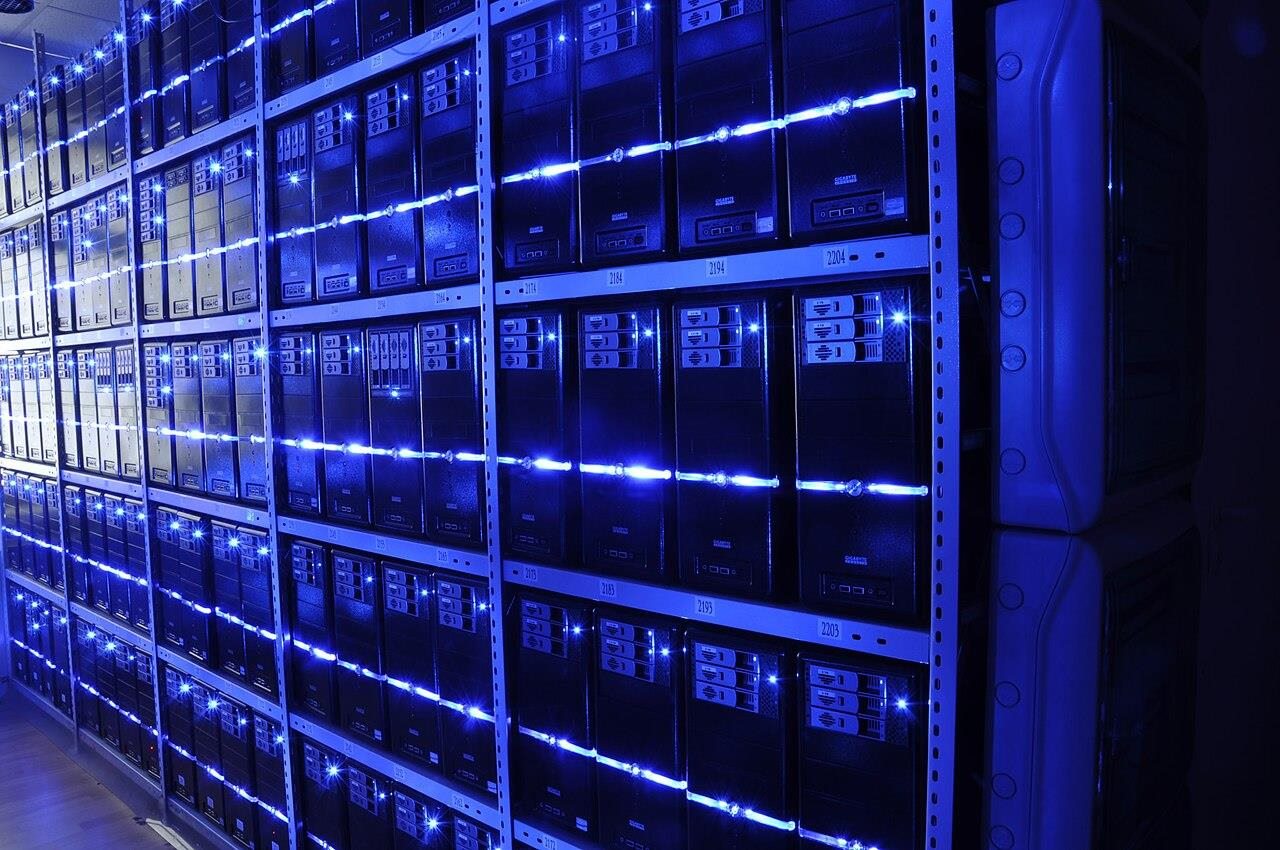
Rows of blue-lit servers in a data centre
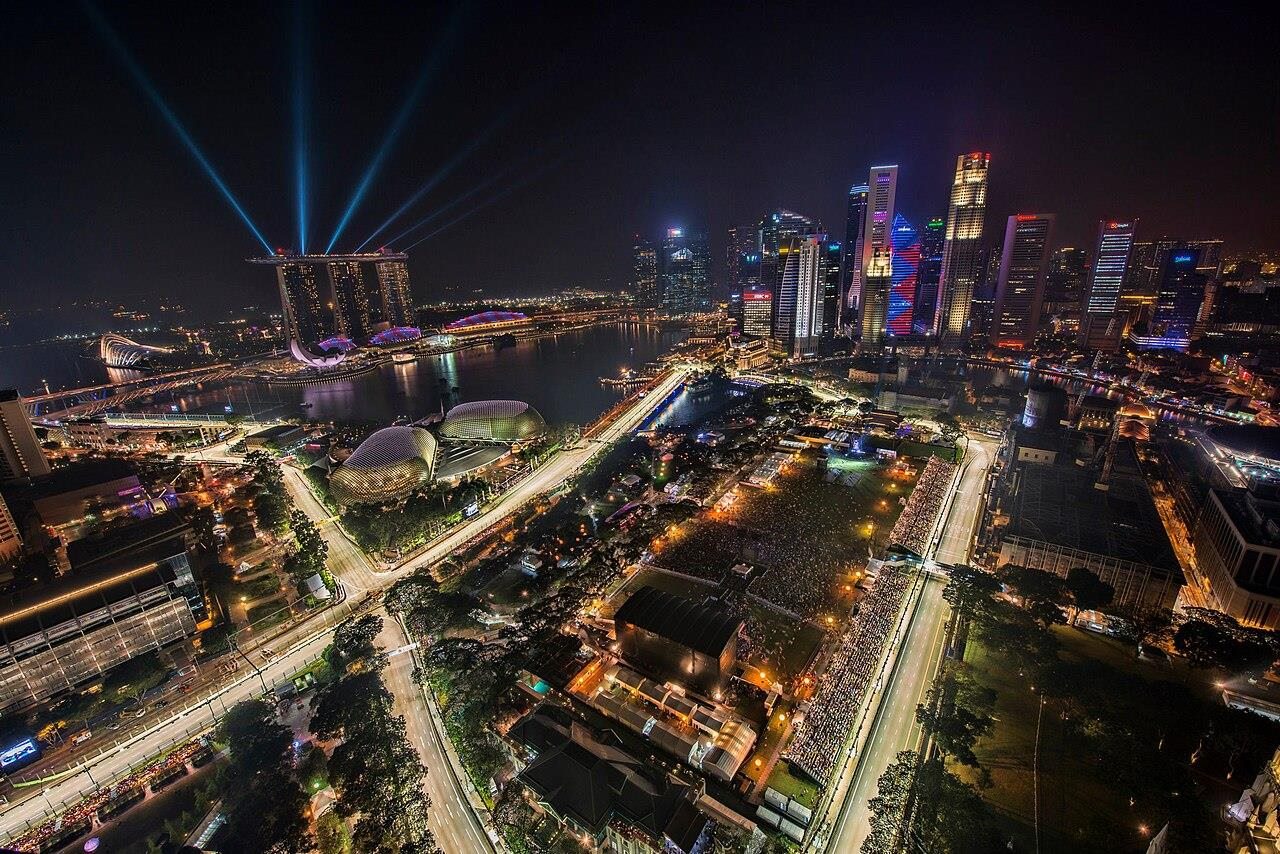
Fig. 01 — Delegation graphAgents · 2028

The agentic years

Intelligence is already free to rent. The change arriving now is not smarter conversation — it is the ability to hand over work and walk away. For the first time, software can hold a goal for hours, recover from its own mistakes, and come back with a finished thing instead of a draft. That single shift reorganises whole professions the way spreadsheets once did, quietly and then all at once.

Businesses stop buying tools and start hiring capacity. A small firm of six runs like a firm of forty; a solo founder keeps a network of specialists who never sleep and never lose the thread. The scarce resource stops being labour and becomes judgement — who can tell a good outcome from a confident one.

Coworkers that never sleep

Agents that draft, plan, reconcile, book and follow up — reporting back like a colleague, not a chatbot.

The clinic that never misses

Scans read before a human arrives, second opinions that are instant and always on the same day.

Compute in everything

A small model in the hearing aid, the tractor, the fridge — intelligence where the data is born.

Energy gets cheaper

Models that design better cells, better grids and better buildings, then tune them forever.

02 The Silicon Century ◆Fabs · nodes · the new oil

The most valuable sand on Earth.

Every headline about intelligence is, at bottom, a headline about fabrication. Before a model can reason, someone has to grow a crystal, slice it into wafers, and print billions of switches onto it with light. The race for those machines is now the defining industrial contest of the century.

Consider what it takes to make a single leading-edge processor. A cylinder of purified silicon grows for days until it is almost perfectly one crystal. It is sliced into wafers thinner than a sheet of paper, polished until it reflects like a mirror, and then passed through hundreds of steps that deposit, etch and carve structures only a few atoms wide. A speck of dust ends the story. So does a flicker in the power.

The plants that do this — the fabs — are among the most expensive buildings humans have ever made, and the machines inside them are more exclusive still. One lithography system can cost more than a wide-body jet and take months to install. There are only a handful of companies on the planet that can build one. That shortage, not the shortage of ideas, is what sets the pace of the entire industry.

This is why compute has started to behave like a strategic resource rather than a component. Nations treat fabrication capacity the way they once treated oil fields and shipping lanes. They subsidise it, guard it, and argue about it in public. A chip is a policy document you can hold in one hand.

The next few years are about more than shrinking. Transistors are being stacked in three dimensions, memory is being brought inside the processor to stop the data from walking, and single large chips are being broken into chiplets that communicate at the speed of a thought. The goal is no longer just more calculation per second — it is more intelligence per watt, because the electricity bill has quietly become the largest line in the industry's ledger.

Which is why the most interesting number in semiconductors is not the node size at all. It is the cost of a useful idea. Every year that falls, another field that used to be too expensive to simulate becomes cheap enough to try.

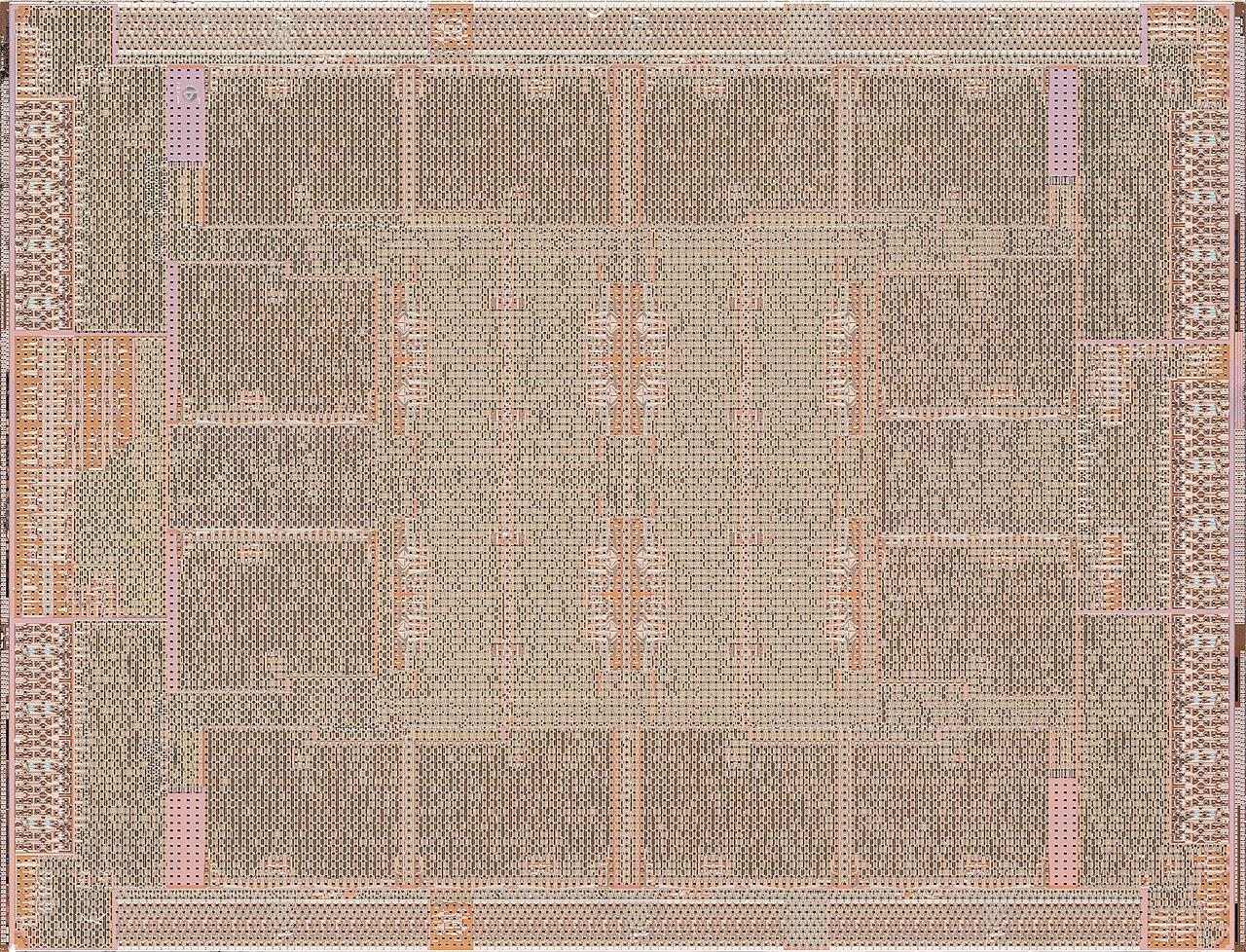
Macro photograph of a semiconductor die
Fig. 04 — Leading-edge package · 16 compute clusters, stacked memory
2nmThe gate length the leading edge is racing toward, where a transistor is a few dozen atoms wide.
~300Process steps a wafer passes through before it becomes a working chip — each one a chance to fail.
3DDevices stacked in layers, memory moved inside the processor to stop the data walking.
Per wattThe number that now matters most: intelligence delivered per joule, not per second.

Node roadmap ◆

Each step down is not merely smaller — it is a different way of building, and a different set of winners.

2022
5 nm
The node that put AI on every phone.
2024
3 nm
Density climbs; power finally falls.
2026
2 nm
New gate geometry, new cost curve.
2029
1.4 nm
Stacking goes vertical in earnest.
2033+
Sub-1 nm
Where physics and economics start arguing.
03 Machines That Move ◆Arms · legs · hands

The decade the machines stood up.

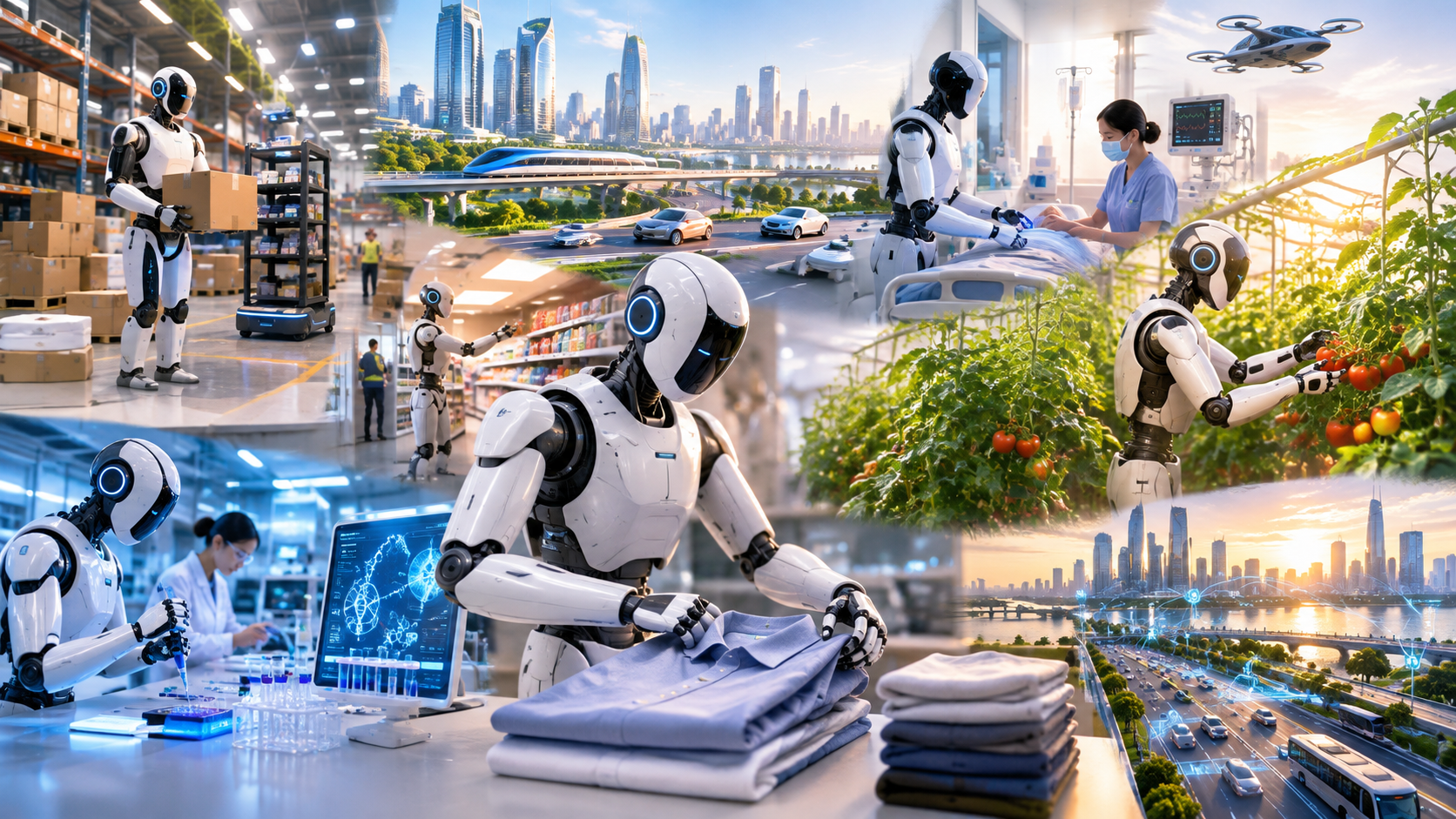
A robot is just a body with opinions about the floor. For fifty years those bodies were bolted down, blind and obedient. The ones arriving now are mobile, curious and general-purpose — and the interesting question is no longer whether they work, but whose floor they work on first.

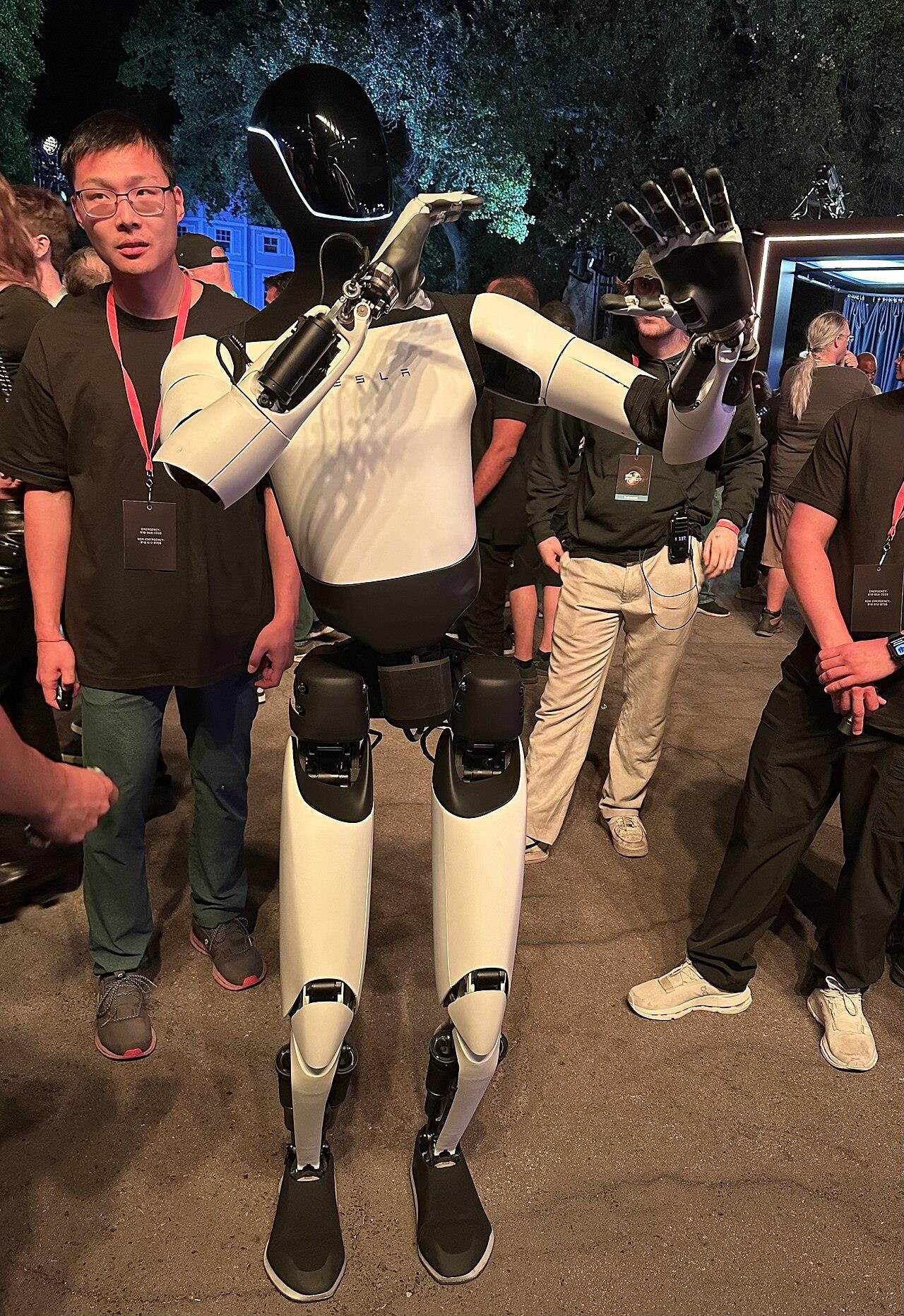
A humanoid robot surrounded by engineers

The hardest problem in robotics was never strength. It was the thousand small judgements that let a thing exist in a messy room. Which edge is safe to grip. What to do when the box is upside down. Whether the person walking past wants help or space. Traditional machines were programmed out of these questions; the new ones are trained into a kind of practical intuition, and then corrected the way you would correct an apprentice.

Once a robot can be taught a task by demonstration instead of written line by line, its economics flip. Skills become software. You do not replace the machine to change its job — you update it, the way a phone learns a new trick overnight. The factory that bought one arm to weld now owns a body that can weld, pack, inspect and, on weekends, stack the shelves at the shop down the street.

The uncomfortable part is the same as the thrilling part. General labour is exactly what most of the world's wage bill is spent on. Where that labour is scarce, dangerous or simply unloved, the arrivals will be welcomed. Where it is plentiful and cheap, the arrival of a tireless alternative will be felt in wages long before it is felt in headlines.

01 / ARMS

Industrial arms, generalised

The immovable workhorses learn to see, adapt and switch jobs without an engineer at the cell. Throughput matters; so does not having to rebuild the line to change the product.

02 / HUMANOIDS

Bodies built like ours

Two arms, two legs, one job: fit into spaces made for people, using tools made for hands. Unromantic and enormously useful — the wheel is useless on a staircase.

03 / SURGERY

Hands steadier than ours

Millimetre work under a surgeon's judgement, with a tremor that never arrives and a view no human eye can hold. The theatre becomes a shared cockpit.

04 / LOGISTICS

The warehouse that runs itself

Goods found, sorted, packed and shipped by fleets that coordinate like a flock. The overnight order stops being a miracle and becomes a default.

05 / FIELDS

Farm and forest

Precision weeding, picking and planting that spares the soil and the back. The tractor becomes a teammate that works through the night before the rain.

06 / FRONTIER

Exploration & space

Machines that go where we cannot survive: the deep trench, the reactor hall, the surface of another world. Distance stops being a disqualification.

04 The Civilization Question ◆An essay on instruments

A telescope for everything.

When Galileo pointed a tube of ground glass at the night sky, he did not discover a single fact about the universe. He changed what could be discovered. The telescope did not replace the astronomer; it made the astronomer enormous. That is the most useful way to think about intelligence as a scientific instrument — not a better calculator, but a new sense.

Science has always been bottlenecked not by genius but by the number of hands and hours available to test a hunch. Every experiment is a question asked of nature, and nature is expensive to interrupt. When a model can propose, simulate and rank a thousand plausible experiments before breakfast, the scientist stops spending their day on the tedious parts and returns to the part that made them a scientist: wondering.

We are already seeing the shape of it. Materials that took a decade of trial and error begin to appear as candidates in a summer. Proteins fold in an afternoon, and then bend to our design rather than nature's. Weather, batteries, catalysts, crop genetics — all of them are search problems, and search problems are exactly where a tireless mind shines.

Every previous technology extended our reach. This one extends our attention — and attention is the rarest resource a civilisation has.

It is worth being honest about the danger in this too. An instrument that generates more hypotheses than we can test creates a backlog of belief: things that look discovered but have not been checked. The discipline of the next decade will not be invention. It will be verification — a new kind of scientific rigour, built to keep pace with a machine that never gets bored of being wrong.

But the ceiling, once it lifts, lifts for good. A civilisation that can ask a million good questions a day and test them overnight is not merely faster. It is a different kind of civilisation — one where the lag between wondering and knowing collapses to almost nothing.
05 The Two Faces ◆Voice · face · the digital afterlife

Every miracle arrives with its shadow.

The same model that can give a grieving family one more conversation can give a stranger your face and your voice. There is no version of this technology that comes without the other side, and pretending otherwise is the least safe thing we could do. So let us look at both, plainly.

The gift

Consent given
A vintage sepia portrait of a man in a hat

A voice, a face and a way of telling a story are among the last things we let go of. Reconstructed from recordings, with the full consent of the person while they were here, they become a way to hear a grandparent read a bedtime story to a child they never met. Grief does not get fixed; it gets a place to sit.

  • Permitted, recorded, revocable consent — given by the person, not assumed on their behalf.
  • A living memory for families separated by distance, illness or a century of migration.
  • Therapist-guided use for bereavement, with clear boundaries and a known end.
  • Cultural memory kept intact: a lost language, an accent, a family recipe explained in the original voice.

The risk

Consent absent
A person wearing a blank white mask in low light

The identical tools, pointed the other way, become a fraud machine. A cloned voice calls a parent and asks for money in their child's exact tone. A cloned face sits in a video call and asks a finance team to move a wire before the bank closes. The technology that comforts one family can empty another's account in eleven minutes.

  • Impersonation fraud that passes the ear and the eye, at a scale no call centre can screen.
  • Non-consensual likeness: a face used in advertisements, or worse, with no permission and no recourse.
  • Exploitation of grief — services that monetise a death before the family has finished mourning it.
  • Erosion of trust itself: once any voice can be faked, even a true recording can be denied.

How the shadow gets smaller

Safety is not a feature bolted on at the end. It is a short list of defaults, agreed in advance, kept by design.

01

Consent is a key, not a checkbox

A voice or face can only be used by whoever holds the key — and the key can be revoked by the person at any time.

02

Provenance on every output

Synthetic media carries a mark that survives copying, so the question "is this real?" has an answer built into the file.

03

The dead speak only if they said so

Reconstructions of the deceased require an explicit, recorded permission given while alive — never a company's default.

04

Verification outruns generation

Every generator ships with a matching detector, and detection quality is held to the same bar as the trick.

05

Grief is not a market

No engagement loops, no upsells, no endless conversation with a copy. Care is bounded, guided and human.

06

Recall is possible

A model that goes wrong can be pulled back, updated and corrected — the same way any other safety-critical system is.

06 Bold Visions ◆Where the wild bets land

The ideas people laughed at.

Every era has a few projects that sound like a joke right up until they sound inevitable. Roads that leave the ground. Cities that dig straight down. Circles around the planet. Here are the ones worth watching with an open mind.

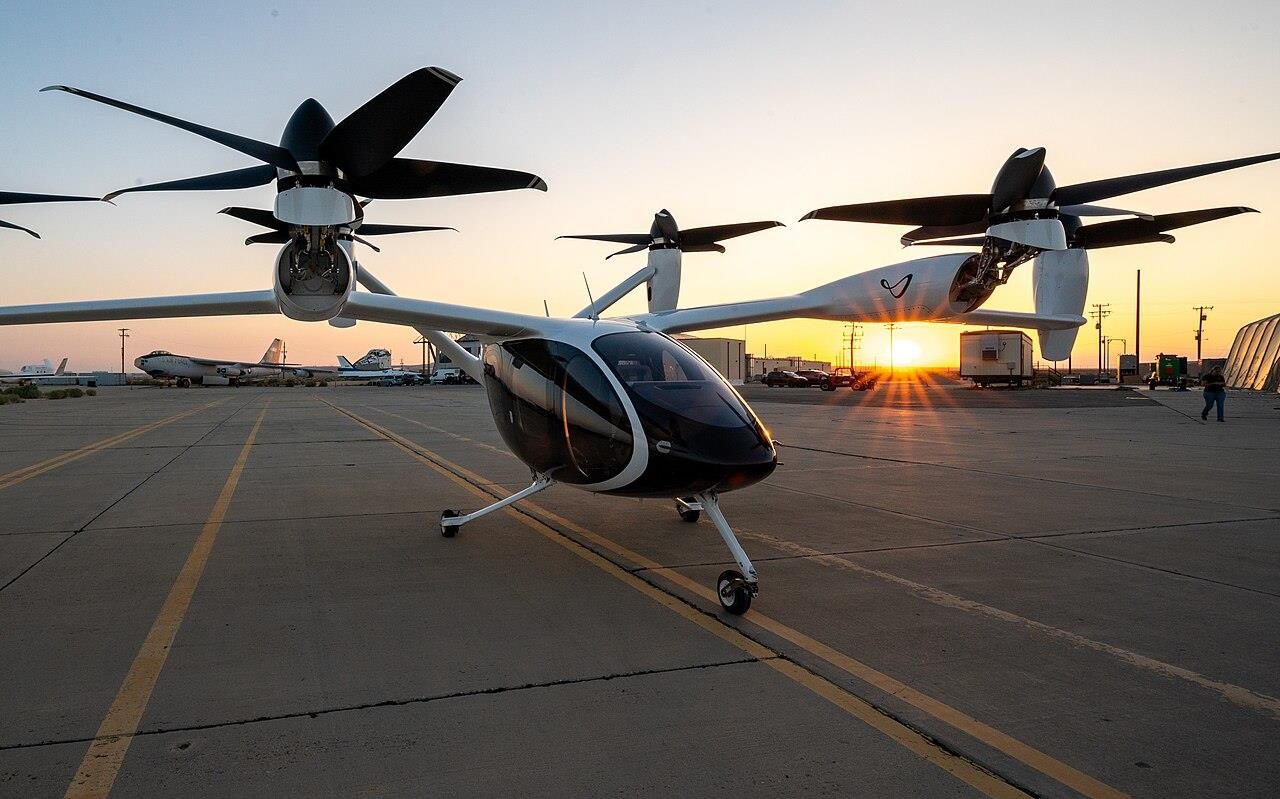
An electric vertical take-off aircraft on a runway at sunset
Mobility · Post-2035

Roads that leave the ground

Two lanes of traffic cost a city more land than it can spare. Move the short hops into the air and the ground goes back to people, trees and the things that actually need wheels. The first versions are loud and rare; the ones that matter will be quiet, cheap and boring — the highest compliment a technology can earn.

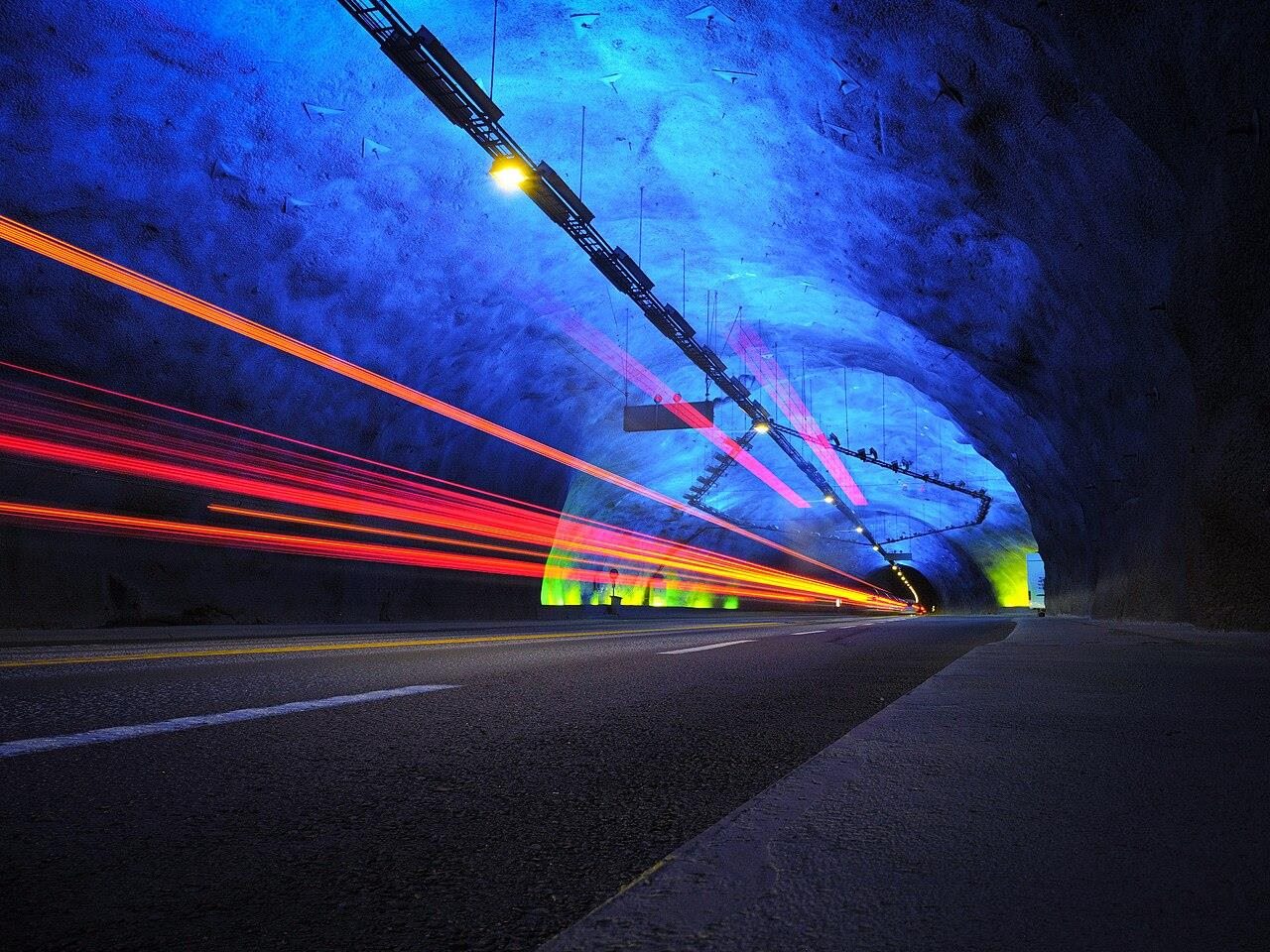
Light trails through a road tunnel at night
Infrastructure · Post-2035

Cities that dig straight down

If the surface is full, build a second one underneath it. A tunnel is not just a hole in the ground — it is a way to move a huge number of people below the weather, below the traffic and below the politics of who owns the street. The machines that dig them are the same machines that will build the roads above.

07 Signals ◆The newsroom, updated weekly

What moved this week.

A rolling desk of the developments worth your attention — chips, robots, science, policy and safety. Filter by the thread you follow; the good news is that there is now enough of it to need a filter.

Chips3 min

A leading fab says its next node is sold out two years ahead

Capacity for the most advanced logic is spoken for before the first wafer ships, a sign that the constraint on intelligence is still the factory floor, not the idea.

Silicon deskRead thread
Robotics4 min

Humanoids pass the night shift in a mid-size warehouse

Six months of unsupervised overnight shifts with a falling error rate. The pilot line becomes the product line, and the shift nobody wanted becomes the one nobody worries about.

Field reportRead thread
Science5 min

A designed enzyme eats a stubborn plastic in weeks, not centuries

Candidate catalysts proposed in hours and validated in a season. A reminder that the deepest wins are quiet, unglamorous and arrive with a warm beaker.

Lab deskRead thread
Policy6 min

"Superintelligence" is now a phrase regulators actually use

What began as a marketing term has become a category in law. However you feel about the word, it changes what companies must report and when.

Policy deskRead thread
Safety4 min

Voice authentication is being retired at the bank door

Too easy to clone, too hard to trust. The replacement leans on liveness and hardware keys — a rare case of a security lesson learned before the breach, not after.

Trust deskRead thread
Chips3 min

Memory moves onto the package and latency falls by half

Bringing the data closer to the arithmetic turns out to matter more than making the arithmetic faster. The quiet architectural win of the year.

Silicon deskRead thread
Robotics5 min

Robot hands learn to feel the difference between ripe and bruised

Tactile sensing finally cheap enough to ship. The grip that once crushed a tomato now sorts a harvest with the care of a person who grew it.

Field reportRead thread
Science7 min

An AI-designed battery holds its charge for a fifth longer

Found in simulation, confirmed on the bench, and now heading to pilot production. Another field where the bottleneck was never the physics — it was the patience.

Lab deskRead thread
Safety4 min

A standard for marking synthetic media reaches its first million files

An invisible signature that survives compression and re-upload. Provenance stops being an argument about honesty and starts being a property of the file.

Trust deskRead thread
08 Open Questions ◆What nobody has answered yet

The questions we are still asking.

An honest issue keeps its unanswerables visible. These are the ones our desk returns to every week — not because they are comfortable, but because the answers will decide the decade.

Productivity has never automatically become leisure. The question is not whether the machines can carry the load, but who receives the time they free up. History suggests the answer is decided by policy and bargaining, not by technology, and that the default is not a shorter week but a quieter concentration of the gains.

The most useful personal move is to own the judgement and the relationships, not the routine.

Consent given while alive is the only honest basis for reconstructing someone. Without it, we are not preserving a person; we are manufacturing an impression of one and calling it memory. The law is catching up slowly, and the technology is not waiting for it.

The clean rule: no reconstruction without a record the person themselves created.

Models trained on our text know a great deal about the shape of things and nothing about the weight of them. Robotics is the experiment that will settle the argument: if a machine that can push, drop and catch begins to reason more like us, then the body was never optional.

Watch the robots that fail gracefully, not the ones that perform.

Every advance that makes a fake easier also makes a truth harder to defend. The frontier is not better detection alone — it is provenance built into the pipeline, so that the origin of a file is as checkable as its contents.

The goal is not to prove nothing is fake, but to prove what is real.

The most important design decision of the next decade is not what the machines can do. It is the short list of things we decide they should never be asked to do for us — the decisions we keep because making them is what makes us who we are.

Write that list down early. It is much harder to write once it is convenient to forget.

The last page ◆

The future is already here. It is just unevenly read.

Ten years is long enough for flying cars to stop being a joke and short enough that the decisions we make this year still shape who benefits. Keep reading. Keep asking who is missing from the picture. The instrument is in our hands now, and instruments do not choose their owners.

One issue a week. The long read, the newsroom and the open questions — no noise in between.